After five decades working as a clinical psychologist, I've seen one truth repeated in every patient, every classroom, and every congregation: resilience is not a personality trait — it is a skill you can learn.

Resilience Is Not a Gift — It Is a Practice
When people hear the word resilience, they often picture someone who simply bounces back from adversity without effort — as though emotional strength were a birthright reserved for the lucky few. After more than fifty years as a clinical psychologist, educator, and behavioral health professional, I can tell you with confidence: that picture is wrong.
Resilience is a learned skill. It is built through deliberate practice, honest self-reflection, and — critically — through community. And it is available to every single person willing to do the work.
What the Research Actually Shows
The American Psychological Association defines resilience as "the process of adapting well in the face of adversity, trauma, tragedy, threats, or significant sources of stress." Notice the word process. Not a state. Not a trait. A process — meaning it unfolds over time, through action.
Decades of longitudinal research, including landmark studies from the University of Minnesota and the Harvard Study of Adult Development, consistently show that the most resilient individuals share several key behaviors:
- They maintain strong social connections. Isolation is the enemy of resilience. Every major study confirms that people with robust support networks — family, friends, faith communities, colleagues — recover from hardship faster and more completely than those who face it alone.
- They practice cognitive reframing. Resilient people do not deny difficulty. They acknowledge it fully, then deliberately shift their interpretation of what that difficulty means. A setback becomes a lesson. A loss becomes a redirection.
- They maintain a sense of purpose. Viktor Frankl, writing from the horror of Nazi concentration camps in Man's Search for Meaning, identified purpose as the single most powerful predictor of survival. Purpose gives suffering a frame — and a frame makes suffering bearable.
- They regulate their nervous system. Chronic stress dysregulates the hypothalamic-pituitary-adrenal (HPA) axis, flooding the body with cortisol and impairing the prefrontal cortex — the seat of rational decision-making. Resilient people have learned, consciously or intuitively, to calm their nervous system through breath, movement, music, prayer, or other grounding practices.
The Role of Music in Emotional Regulation
I have spent my career at the intersection of psychology and music, and I can tell you that this intersection is not accidental. Music is one of the most powerful neurological tools for emotional regulation available to human beings — and it costs nothing.
Research published in the journal Frontiers in Psychology confirms that music activates the limbic system, the brain's emotional center, while simultaneously engaging the prefrontal cortex. This dual activation is rare. Most emotional stimuli bypass rational processing entirely. Music, uniquely, engages both — which is why a hymn can simultaneously move you to tears and fill you with peace.
In my clinical practice, I routinely recommended music as a therapeutic intervention: not as a replacement for evidence-based treatment, but as a powerful complement to it. Patients who engaged with music — whether listening, singing, or playing — consistently reported lower anxiety, improved sleep, and a greater sense of connection to something larger than themselves.
Three Practices You Can Start Today
You do not need a therapist's office or a clinical diagnosis to begin building resilience. Here are three evidence-based practices you can implement immediately:
- The Three Good Things Exercise. Each evening, write down three things that went well during the day and why they happened. This practice, developed by Dr. Martin Seligman at the University of Pennsylvania, has been shown in randomized controlled trials to significantly reduce depressive symptoms and increase well-being within two weeks.
- Scheduled Worry Time. Rather than allowing anxious thoughts to intrude throughout the day, designate a specific 20-minute window — say, 5:00 PM — as your "worry time." When anxious thoughts arise outside that window, gently redirect yourself: "I'll think about that at 5." This technique, drawn from Cognitive Behavioral Therapy, reduces the total cognitive load of anxiety by containing it.
- Daily Music Immersion. Choose one piece of music each day that genuinely moves you — not background noise, but intentional listening. Sit with it. Let it work on you. This is not indulgence. It is neurological maintenance.
A Word About Faith
I would be incomplete if I did not mention faith. In fifty years of clinical practice, I have observed that individuals with a robust spiritual life — regardless of denomination or tradition — consistently demonstrate greater resilience than those without one. This is not a theological claim. It is an empirical observation, supported by a substantial body of research including Harold Koenig's landmark work at Duke University's Center for Spirituality, Theology and Health.
Faith provides exactly what resilience requires: community, purpose, a framework for suffering, and practices — prayer, worship, service — that regulate the nervous system and connect the individual to something beyond themselves.
You Are More Resilient Than You Know
If you are reading this in a difficult season, I want you to hear this clearly: you are more resilient than you know. The very fact that you are seeking understanding — that you are reading, learning, reaching — is itself an act of resilience.
The science is clear. The practices are available. The community is waiting. And the music is always playing.
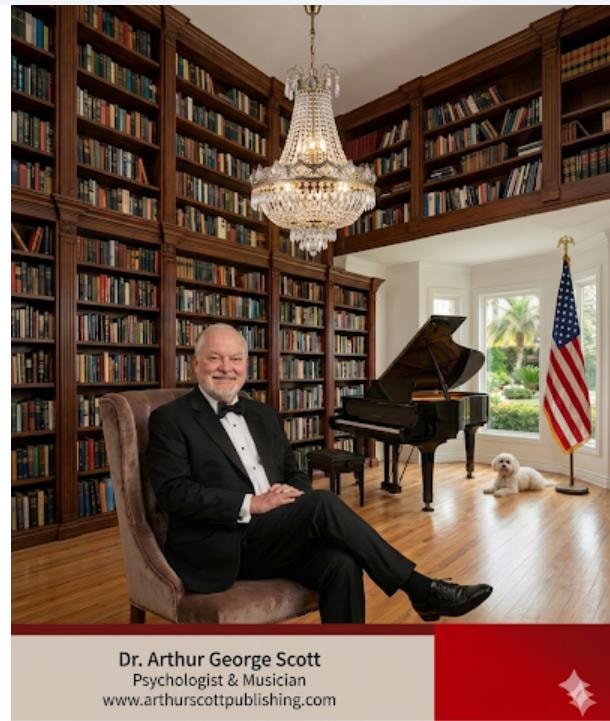
Dr. Arthur George Scott is a clinical psychologist, musician, and educator with over five decades of experience in behavioral health, music ministry, and academic instruction. He is the author of more than 123 e-books and the founder of multiple educational platforms serving families, faith communities, and lifelong learners worldwide.
Written by
Dr. Arthur George Scott
Dr. Arthur George Scott is a clinical psychologist, pianist, educator, and AI consultant with over 50 years of experience. He is the author of 123+ e-books and the founder of multiple platforms serving faith communities, music students, and lifelong learners worldwide. Learn more about Dr. Scott →