Choosing a faith community is one of the most consequential decisions a person can make for their mental health, their family, and their spiritual formation. Most people make it by accident. Here is how to make it intentionally.

The Most Underrated Decision in Mental Health
If I asked you to name the most important factors in long-term mental health and well-being, you might say: therapy, medication, exercise, sleep, diet, social connection. All of these would be correct. But there is one factor that rarely makes the list, despite being supported by an enormous body of research: religious community.
A 2016 study published in JAMA Internal Medicine, drawing on data from over 74,000 women followed for sixteen years, found that regular religious service attendance was associated with a 33% lower risk of mortality, a 68% lower risk of suicide, and significantly lower rates of depression, anxiety, and substance abuse. These are not trivial effects. These are among the largest effect sizes in the entire mental health literature.
Why Church Community Supports Mental Health
The mental health benefits of religious community are not mysterious. They flow from several well-understood mechanisms:
Social Connection
Loneliness is one of the most significant public health crises of our time. Former U.S. Surgeon General Vivek Murthy has called it an epidemic, with health consequences comparable to smoking fifteen cigarettes a day. A healthy faith community provides exactly what loneliness deprives us of: regular, meaningful contact with people who know us, care about us, and share our deepest values.
Meaning and Purpose
As Viktor Frankl demonstrated in his work with Holocaust survivors, a sense of meaning and purpose is one of the most powerful buffers against psychological suffering. Religious faith, at its best, provides a comprehensive framework of meaning — an answer to the questions "Why am I here?" and "What does my life matter?"
Structured Practices
Religious communities provide structured practices — weekly worship, daily prayer, seasonal observances, rites of passage — that create rhythm and predictability in human life. Research on the psychology of habit and routine consistently shows that structured practices reduce anxiety, improve mood, and support consistent behavior.
Transcendence
Human beings have a deep need for experiences that connect them to something larger than themselves. Religious worship, at its best, provides this: the experience of being part of something ancient, vast, and meaningful that extends far beyond the individual ego.
The Problem: Not All Churches Are Healthy
I want to be honest about something that is often glossed over in discussions of religion and mental health: not all faith communities are healthy. Some are actively harmful.
Churches that use shame, fear, and social pressure to control their members; that discourage honest questioning; that cover up abuse; that exclude people based on race, gender, or sexual orientation; that prioritize institutional loyalty over individual well-being — these communities do not support mental health. They undermine it.
What a Healthy Faith Community Looks Like
After fifty years as a church musician, worship consultant, and founder of eChurchReview.com, I have developed a clear picture of what distinguishes a healthy faith community from an unhealthy one:
- Honest preaching. A healthy church engages honestly with difficulty, doubt, and complexity — while pointing consistently toward hope.
- Genuine community. Does the congregation actually know each other? Are there structures — small groups, shared meals, service projects — that create genuine relationship beyond Sunday morning?
- Healthy leadership. Healthy churches have leaders who are accountable — to a board, to a denomination, to a clear set of ethical standards.
- A culture of grace. Does the community extend genuine grace to people who are struggling, failing, or different?
- Excellent music. A congregation that sings with conviction has usually invested in music as a central act of worship — and is usually a congregation that takes its faith seriously.
How to Find Your Church Home
- Visit multiple churches before committing. Give yourself permission to shop. Visit at least five or six different congregations before making a decision.
- Attend a small group or midweek gathering. Sunday morning is a church's best foot forward. To see the real community, you need to see it in a smaller, less formal setting.
- Talk to the pastor. A brief conversation with the senior pastor will tell you a great deal about the culture of the church.
- Ask about accountability structures. Who does the pastor answer to? What happens when a leader fails? These are not impolite questions. They are essential ones.
- Use resources like eChurchReview.com. My website exists precisely to help people navigate this process — with honest reviews, practical guidance, and a community of people who take the question of church selection seriously.
A Final Word
Finding the right faith community is one of the most important investments you can make in your mental health, your family's well-being, and your spiritual formation. It takes time, discernment, and a willingness to be honest about what you need.
But when you find it — when you find a community where you are known, where the music moves you, where the preaching challenges and sustains you, where the people around you are genuinely trying to live out their faith — you will have found something that no therapist's office, no medication, and no self-help book can fully replace.
You will have found a home.
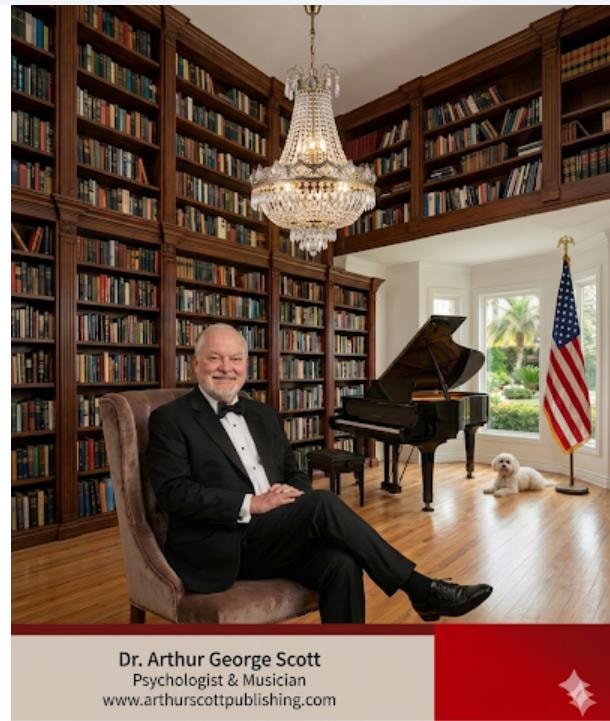
Dr. Arthur George Scott is a clinical psychologist, church musician, and the founder of eChurchReview.com and FindAChurchJobToday.com. He has served faith communities across the United States for over fifty years and is a passionate advocate for the role of healthy religious community in mental health and human flourishing.
Written by
Dr. Arthur George Scott
Dr. Arthur George Scott is a clinical psychologist, pianist, educator, and AI consultant with over 50 years of experience. He is the author of 123+ e-books and the founder of multiple platforms serving faith communities, music students, and lifelong learners worldwide. Learn more about Dr. Scott →